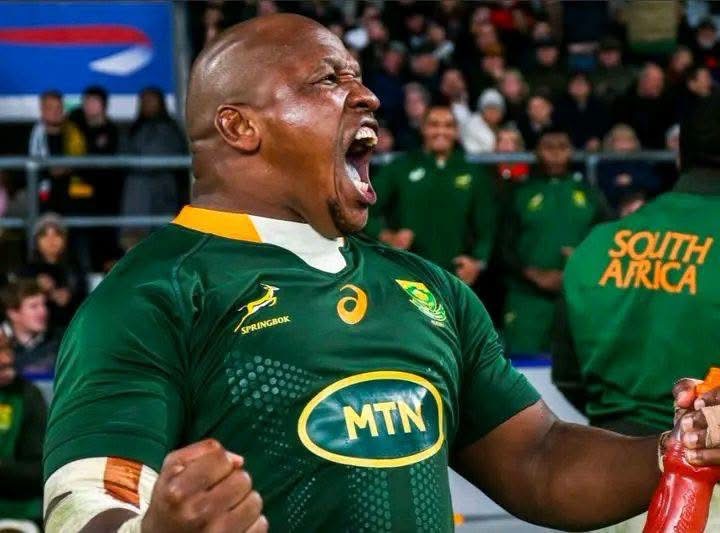
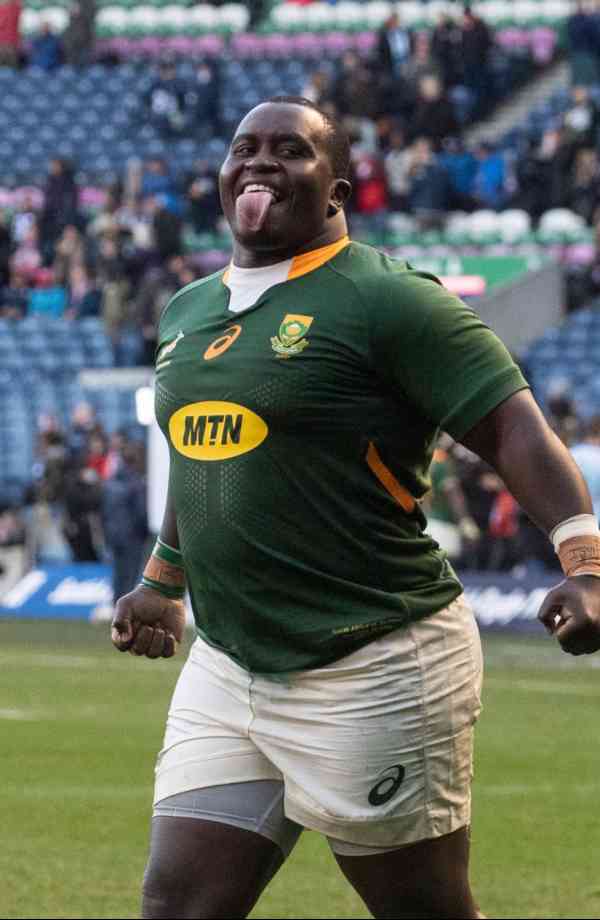
Bongi Mbonambi has earned his place in South African rugby history. He made his Springbok debut against Ireland in 2016, has won more than 80 Test caps, won the Rugby World Cup in 2019 and 2023, and spent a decade competing among the world's leading hookers.
Yet, in October 2026, his future at the Sharks is reportedly under threat following an alleged breach of team rules during a pre-season camp.
According to a report in the Afrikaans newspaper Rapport, published on 10 October, Mbonambi faces an internal disciplinary process that could result in the early termination of his contract. That contract, a two-year extension signed in March 2026, runs to the end of the 2027/28 season. Other players reportedly connected to the same incident received written warnings, while one was excused altogether.
No finding of guilt and no decision to terminate his contract had been confirmed as of 14 October.
And that distinction matters.
Because this story raises questions that extend far beyond one night out, one player or one rugby franchise.
Is Bongi Mbonambi being held accountable for misconduct, or is he being subjected to a response that is disproportionate to the alleged offence? And has South African rugby done everything necessary to understand the circumstances before potentially ending the club career of one of its most accomplished players?
These are questions worth asking. They are not conclusions we can yet draw.
What is reported to have happened
According to Rapport, the incident took place during a pre-season team-building camp at Bayala Private Safari Lodges in Zululand.
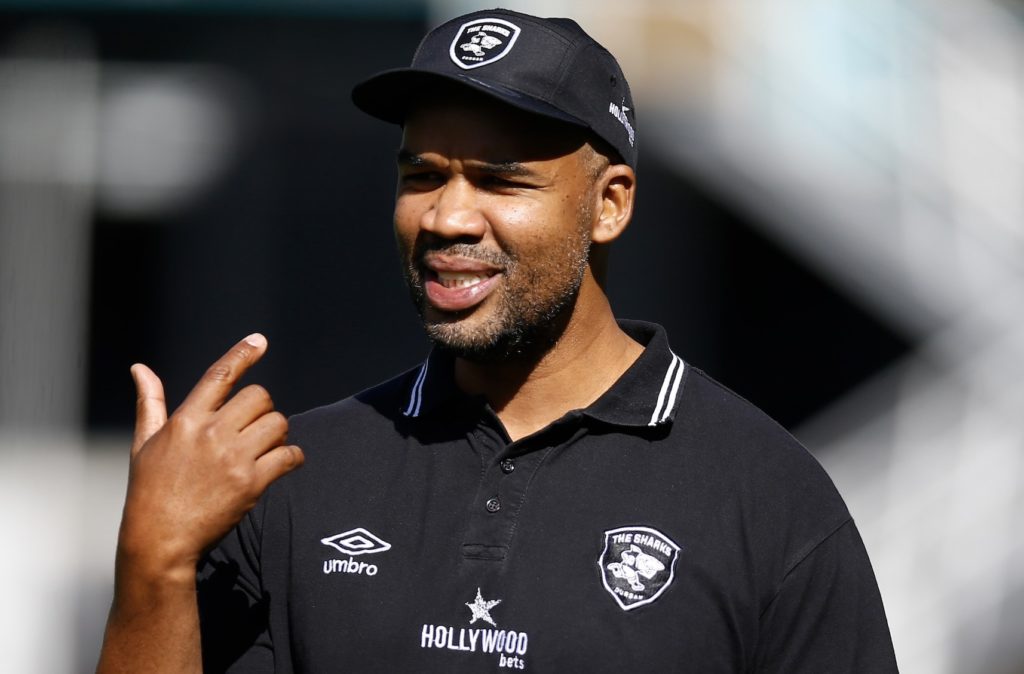
Head coach JP Pietersen reportedly set rules for the camp, including limits on after-hours socialising. A social was permitted on the Tuesday evening. The allegation is that Mbonambi, prop Trevor Nyakane and hooker Eduan Swart continued into Wednesday morning, while young hooker Fez Mbatha reportedly missed a team activity the following morning.
The reported outcomes differed sharply.
Mbatha and Swart reportedly received written warnings, treated as first offences, and apologised. Nyakane was reportedly excused because he had not been present when Pietersen set the rules. Mbonambi was reportedly held out of training despite being fit, referred to a disciplinary hearing and now faces the possibility of termination. His seniority, and the fact that he was present when the rules were set, are reported as the factors weighing against him.
Every substantive detail of that account originates from the single Rapport report. Every other outlet that has carried the story cites it.
The punishment must fit the offence
Professional rugby is built around discipline. Players are expected to respect team rules, arrive prepared and understand that their actions can affect an entire squad.
Nobody is arguing otherwise.
But professional rugby is also a demanding environment in which players socialise, celebrate and, at times, make poor decisions. South African rugby has seen this before.
In May 2019, after the Lions lost to the Sharks in Durban, Elton Jantjies went out and returned to the team hotel at around 4am, encountering chief executive Rudolf Straeuli in the foyer. The Lions dropped him for a breach of team protocol and withdrew a new contract offer that had been on the table. They did not terminate his existing contract.
That case does not excuse misconduct. It does, however, raise an important question about consistency.
If the reported incident at the Sharks involved a night of socialising that continued beyond permitted hours, what precisely justifies the level of disciplinary action reportedly being considered against Mbonambi?
Were the players charged with the same offences? Were there previous warnings or additional allegations? Did their responsibilities, conduct or disciplinary histories differ? Was the severity of the potential sanction assessed against established club policy?
These details matter because the public account remains incomplete.
Mbonambi's reported treatment appears considerably more severe than that of teammates implicated in the same episode. Seniority may justify a stricter response; leaders are rightly held to a higher standard. But there is a significant distance between a written warning and the termination of a contract with two seasons remaining. If that difference is justified by material facts, those facts should form part of the assessment. If the circumstances are substantially comparable, the difference in treatment deserves closer scrutiny.
Accountability is essential. Proportionality is equally essential.
What the law requires
Proportionality is not merely a matter of opinion. In South Africa, it is a legal requirement.
Professional rugby players are employees covered by the Labour Relations Act, a principle established in rugby itself. In 2004, the Commission for Conciliation, Mediation and Arbitration found that Springboks Victor Matfield, Richard Bands and Christo Bezuidenhout had been unfairly dismissed by SA Rugby, on both substantive and procedural grounds. The players were awarded R1 million in total.
Under that framework, a dismissal must be substantively fair, meaning there must be a valid reason and a sanction proportionate to the offence. It must also be procedurally fair, meaning a proper hearing with the right to representation. Where either test fails, the dismissal is unfair and can be challenged at the CCMA. Section 193 of the Act makes reinstatement the default remedy.
Process alone can be decisive. In Molope v Mbha (2005), a dismissal that was substantively fair was nonetheless set aside because the employer refused a postponement that would have allowed the employee to secure representation.
The body positioned to represent Mbonambi is MyPlayers, formerly the South African Rugby Players' Association, the same organisational lineage that won the 2004 case. It had made no public statement on the matter as of 14 October.
Has anyone asked why?
There is another question that deserves attention.
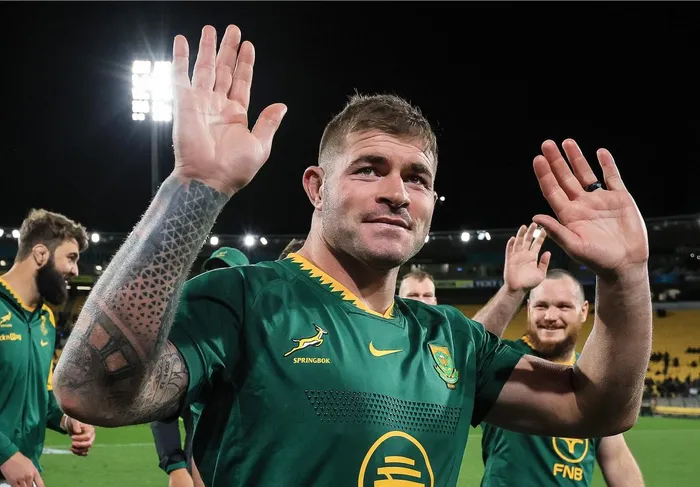
Mbonambi is not an inexperienced youngster navigating his first professional contract. He is a 35-year-old veteran international who has spent years operating within elite rugby environments. He understands team discipline, the demands of professional sport and the consequences of letting his teammates down.
That does not mean he is incapable of making a mistake. Great players are human beings, not infallible institutions.
His recent circumstances are also worth considering. He was sidelined by a knee injury followed by a lower-back problem across much of the 2025–26 season. He has not played Test rugby since the 2025 Rugby Championship. The Sharks re-signed him in March while he was still out injured.
When an experienced professional with that history reportedly finds himself at the centre of a serious disciplinary dispute, is punishment the only question the relevant parties should be asking?
Has anyone established whether there were underlying personal circumstances that might help explain what happened?
Has the club engaged with the player privately to understand his position? Has anyone considered whether welfare support, counselling or an appropriate professional assessment might be warranted? Has MyPlayers been involved in ensuring that the process is fair?
We have no verified evidence that Mbonambi is experiencing a mental-health problem, and we should not speculate about his health. Nor do we know whether counselling or an assessment has been offered.
The point is that these questions remain unanswered in the public reporting.
South African rugby has shown it can place welfare at the centre of a difficult case. When the Bulls and Sbu Nkosi parted ways by mutual consent in June 2023, after a period in which his struggles were attributed to mental health, chief executive Edgar Rathbone framed the decision around the player's welfare.
A welfare assessment would not excuse a proven breach of team rules. It could, however, help establish the full circumstances and inform an appropriate response.
Before an organisation considers terminating a player's contract, has it established what happened, why it happened and whether the proposed sanction is justified?
That is a reasonable question to ask of any professional sports institution.
The club's own direction
The disciplinary case has not emerged in a vacuum.
In February 2026, the Sharks restructured their entire rugby operation. Pietersen was confirmed as permanent head coach, Dave Williams was promoted into a newly created General Manager role, Neil Powell was moved to Head of Junior Rugby and a recruitment committee was formed.
Chief executive Shaun Bryans told Daily Maverick that franchises pay a significant price for Springbok success, with top players featuring in up to 15 Tests a year, missing pre-season and returning fatigued. The club publicly moved away from stockpiling marquee Springboks and towards youth development and data-driven recruitment.
The restructure followed a sharp decline. The Sharks finished third in the 2024/25 United Rugby Championship and won the SA Shield, then fell to tenth in 2025/26, with a squad built around an ageing Springbok core.
None of this establishes that Mbonambi is being targeted. A club is entitled to set new standards and to enforce them.
But it does raise a fair question. When a franchise has publicly committed to reducing its reliance on senior Springboks, and one of its most senior Springboks holds a contract to 2028, it becomes especially important that any disciplinary process is demonstrably separate from that strategy.
The Malcolm Marx connection
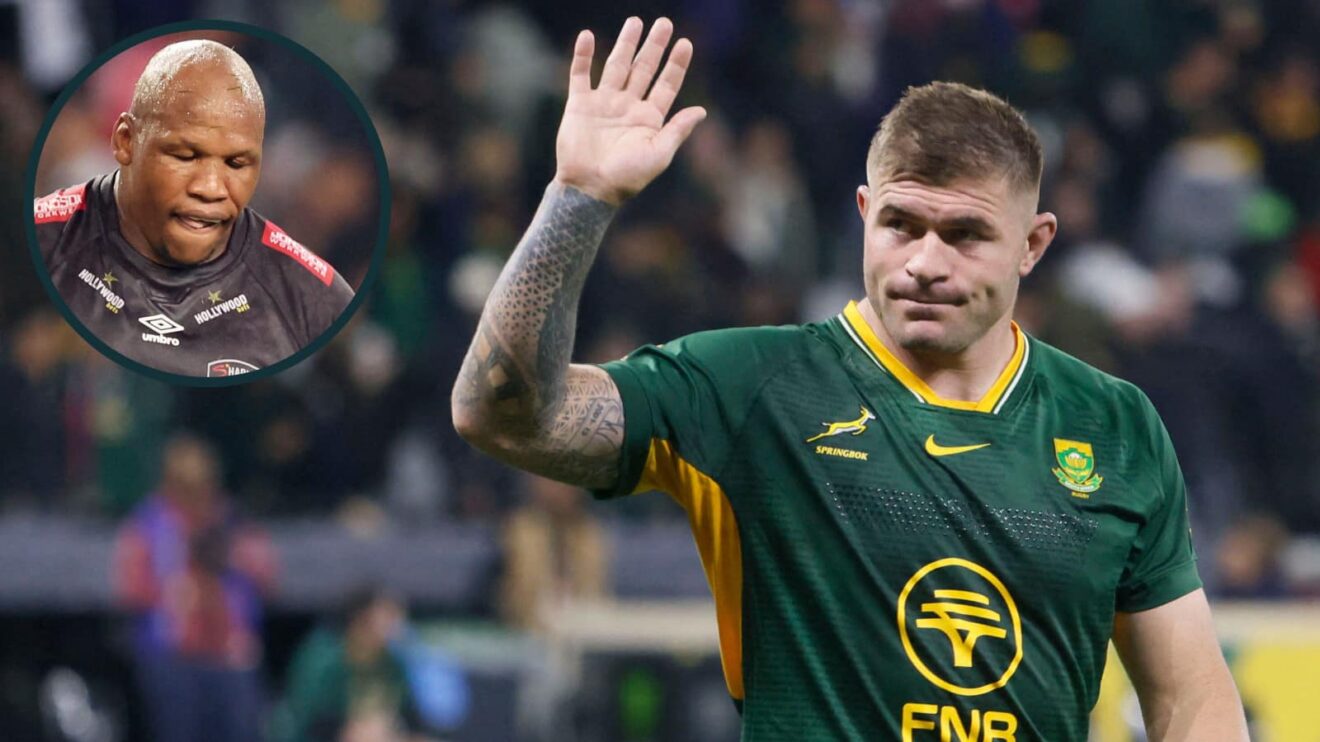
The situation becomes more intriguing when considered alongside reports that the Sharks are interested in Malcolm Marx.
Marx is an established Springbok hooker, a fellow double Rugby World Cup winner and the 2025 World Rugby Player of the Year. His potential return to South Africa has attracted interest from the Bulls. Rapport first reported that interest on 16 August, and Bulls coach Johan Ackermann publicly acknowledged on 18 September that Marx was among the players being discussed, adding that nothing was finalised.
The Sharks' reported interest emerged in October, in the same Rapport reporting that broke the Mbonambi disciplinary story.
That timing naturally invites questions.
Is the franchise preparing for the possibility that Mbonambi will leave? Is Marx being considered as part of a longer-term recruitment strategy? Or are two separate developments being connected because they concern the same position?
There is an important qualification: the reported Sharks interest in Marx originates solely from Rapport and has not been confirmed by the club. Marx has not commented, and no offer or transfer has been established. He is reported to be contracted to Kubota Spears in Japan until mid-2027.
The chronology also matters. The Bulls' interest predates the Mbonambi controversy by weeks, and the Sharks had already signed 20-year-old Junior Springbok hooker Esethu Mnebelele from the Bulls, billed in the reporting as Mbonambi's successor.
Consequently, we cannot claim that Marx is being brought in to replace Mbonambi as part of a predetermined plan to force him out.
But the possibility of a recruitment strategy running alongside a disciplinary process raises a legitimate question: are decisions about the player's future being made independently of the disciplinary outcome, or could the two processes be influencing one another?
The distinction is critical.
A club is entitled to plan for the future. It is also entitled to enforce its rules. What it should not do is allow a recruitment preference to predetermine the outcome of a disciplinary matter.
There is currently no evidence establishing that the Sharks have done so. The question remains one for further investigation.
Does race deserve to be part of the discussion?
This is perhaps the most sensitive question, but sensitivity should not make legitimate scrutiny impossible.
Mbonambi is a senior player of colour in a South African rugby system shaped by a complicated history of racial exclusion, unequal opportunity and transformation. That history makes questions about fairness and consistency particularly significant.
It does not, by itself, prove discrimination in this case.
We must be careful not to confuse historical context with evidence of an individual's motive. No verified evidence currently establishes that race influenced the Sharks' disciplinary process, and the reported interest in Marx does not establish a racial agenda.
Nevertheless, a fair question remains: are comparable players being treated comparably, regardless of race, seniority or commercial value?
If white players have committed genuinely comparable breaches and received lesser sanctions, those cases would be relevant. But the comparison must be specific. We need the circumstances, the rules breached, the disciplinary histories and the actual consequences, not simply examples of different players who have been seen drinking.
Have similar incidents occurred at other franchises? What sanctions followed? Were contracts terminated, offers withdrawn or players given opportunities to return? How consistently are team rules enforced across South African professional rugby?
Those are questions for evidence, not assumptions.
We are not declaring that anyone is racist. We are asking whether the process is consistent, transparent and fair enough to withstand scrutiny.
That is a distinction worth preserving.
Who controls the narrative?
There is also a media question.
The disciplinary story entered the public domain through Rapport, an Afrikaans Sunday newspaper, before being repeated by The Citizen, IOL, RugbyPass, Planet Rugby, Briefly, rugby365 and international outlets. Some of that coverage has run ahead of the reporting itself; France's Rugbyrama, for example, described Mbonambi as suspended, although no public Sharks statement has confirmed a suspension or its terms.
Headlines matter. They influence how supporters interpret a story before they have read the underlying reporting or considered the evidence.
When a player's career is discussed in terms of dismissal before a disciplinary finding has been publicly established, the risk is that an allegation begins to acquire the status of a verdict.
That deserves scrutiny.
However, the fact that the story originated in Afrikaans-language media does not establish that the reporting was deliberately misleading or that an agenda exists. Nor does the repetition of the story across several publications amount to independent confirmation. Much of the coverage traces back to the same original report.
The appropriate response is to examine the reporting itself.
What was directly established? What came from anonymous sources? Which details were independently verified? Were Mbonambi or his representatives approached for comment? Were the Sharks given an opportunity to respond? Have the headlines accurately distinguished between a possible sanction and a confirmed decision?
We should ask whether the coverage has created a narrative that runs ahead of the evidence.
But we should also be prepared to accept that the original allegations may be accurate. Responsible journalism does not mean assuming a report is false because its consequences are serious.
It means refusing to confuse the existence of a report with proof of every claim contained within it.
The silence
Compounding the uncertainty is the absence of any substantive comment from the parties involved.
Asked about Mbonambi's absence, Pietersen said: "Bongi is obviously not available. There is no comment on Bongi." He has declined to comment at subsequent media sessions. A source inside the club, quoted in Mike Greenaway's IOL column, said the Sharks decline to comment out of respect for the disciplinary process. Mbonambi and his agent have said nothing.
IOL columnist Leighton Koopman criticised that silence, arguing that while the club is not obliged to disclose every detail, a simple explanation of where matters stand would help settle speculation.
Respect for the process is legitimate. But silence does not stop questions from being asked. It allows them to multiply.
A double champion cannot be reduced to one controversy
Mbonambi's record deserves to be considered in full.
He is a two-time Rugby World Cup winner, part of the 2025 Rugby Championship-winning squad and a player whose contribution to South African rugby extends well beyond one disciplinary controversy. On 26 August 2026, Springbok coach Rassie Erasmus said Mbonambi remained in his plans but needed game time at club level.
That makes the current situation particularly consequential.
He is reportedly fit, yet not training with the squad, and is reported to have missed the opening three rounds of the URC season. Every week he cannot play is a week in which he cannot demonstrate his fitness and form, with the Springboks' end-of-year Tests approaching.
This creates a difficult situation: the disciplinary process may determine his availability, while his lack of availability may simultaneously undermine his opportunity to return to international selection.
That consequence does not establish that the Sharks intend to end his Springbok career. Selection ultimately rests with the national coaching staff, and there is no verified evidence that the Sharks are deliberately attempting to prevent Mbonambi from representing South Africa again.
But it reinforces the importance of a timely and fair process.
A player's reputation, contractual security and international prospects can all be affected before the public knows what evidence was presented or what decision was reached.
Mbonambi should not be exempt from accountability because of his achievements. Equally, those achievements should not be discarded as though they have no bearing on the context in which his career is being assessed.
The question is not whether a World Cup winner should be above the rules.
The question is whether a player who has given so much to South African rugby is receiving the same procedural fairness and proportionate treatment that any other contracted player should expect.
What must happen next?
The Sharks are entitled to protect their team standards. Mbonambi is entitled to a fair disciplinary process. Supporters are entitled to ask reasonable questions when the publicly reported circumstances suggest that different players may have faced different consequences.
The next steps should be straightforward.
The specific allegations must be established. The relevant decision-makers must assess the evidence, the applicable rules and the proportionality of any sanction. Mbonambi must have a meaningful opportunity to respond, with appropriate representation. Any decision must be made on its merits rather than on the basis of speculation about future recruitment.
The club may have legitimate reasons for limiting public comment while the matter is ongoing. That does not mean the public should accept every rumour as fact, nor does it remove the importance of a clear explanation once the process permits one.
MyPlayers also has an important role in ensuring that the player's contractual and procedural rights are respected.
And if the eventual outcome differs sharply from the treatment reportedly given to other players, the relevant parties should be able to explain the material differences in circumstances without compromising legitimate confidentiality.
We do not yet know whether the allegations will be substantiated, whether the reported disparity in sanctions is justified, or whether Marx will ever join the Sharks.
We do not know whether the club has considered welfare measures, and we have no verified basis for concluding that race or a desire to undermine Mbonambi's value has influenced its actions.
Those uncertainties must remain visible.
The questions remain
Is Bongi Mbonambi being disciplined fairly?
Is the reported response proportionate to the conduct alleged?
Have all relevant circumstances been investigated before the possibility of terminating his contract is considered?
Has the player's welfare been considered alongside the alleged breach?
Are comparable players being treated consistently?
Is the media reporting allowing allegations to become accepted conclusions before the process is complete?
And, given the reported interest in Malcolm Marx, are the Sharks keeping recruitment decisions separate from the disciplinary process?
We do not know the answers yet.
But asking these questions is not an attack on the Sharks, an accusation of racism or a demand that Mbonambi be excused from responsibility. It is a demand for fairness, consistency and evidence.
South African rugby has every reason to uphold high standards. It also has every reason to ensure that those standards are applied transparently and proportionately, particularly when the consequences could end a distinguished player's career at his club.
Bongi Mbonambi deserves the opportunity to have his case assessed on its actual merits, not through speculation, headlines or assumptions about what might happen next.
We wish Bongi all the best. The truth must come first.
ScrumAtMe — Comedic Technical Analysts.
Real facts. Wild jokes.