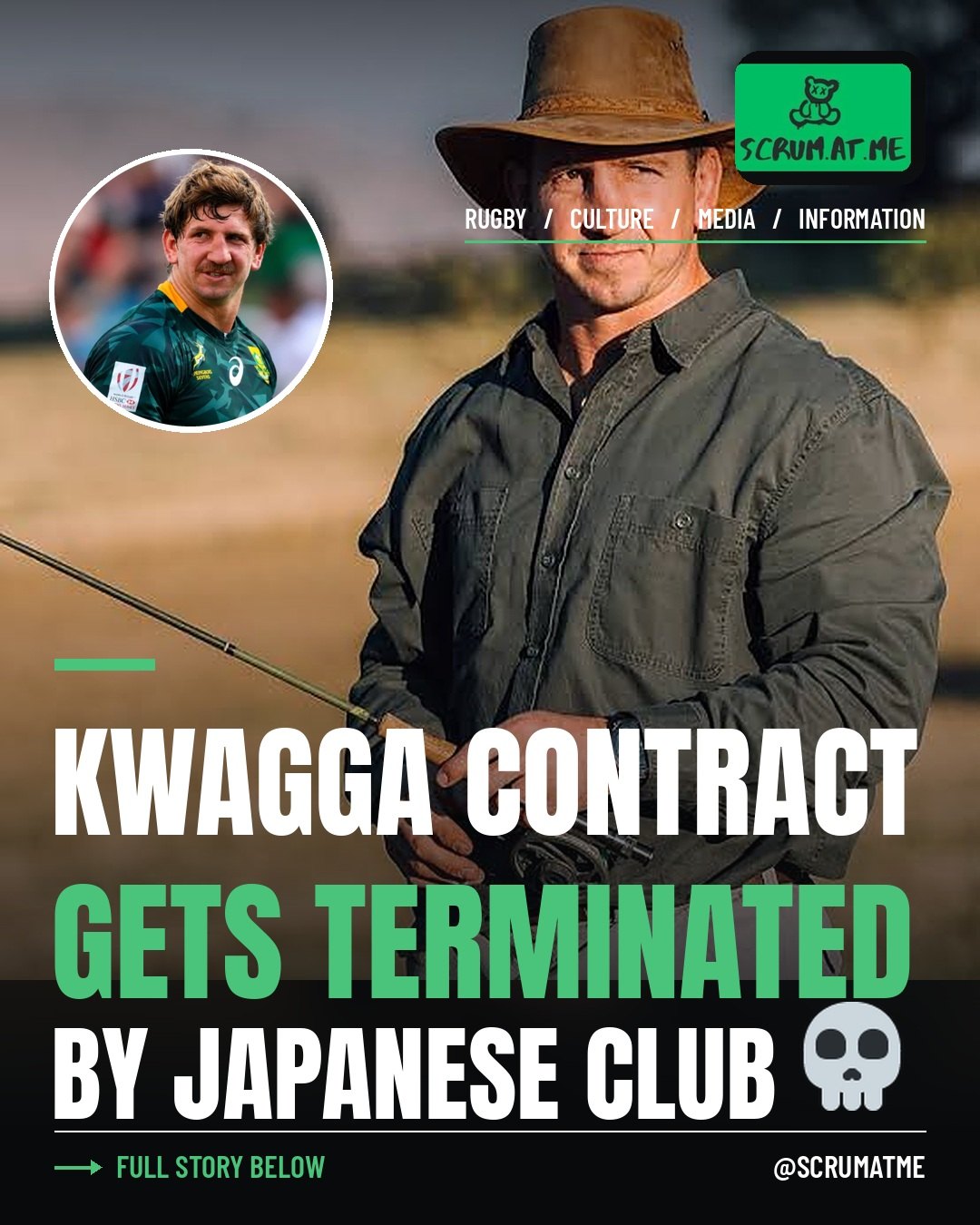
Nahhh. Before we turn this into another transfer announcement and move on, can we ask the uncomfortable question?
Has professional rugby become a business in which clubs use players, players use clubs, and everybody calls it loyalty until the next contract comes along?
Because Kwagga Smith’s departure from Shizuoka Blue Revs is more interesting than a standard goodbye post.
And the bigger question extends well beyond one Springbok: is Japan Rugby League One helping build the game — or has rugby become another global marketplace where money, roster rules and commercial opportunity increasingly determine where the game’s biggest names end up?
Let’s separate what we know from what we suspect.
Eight years of service. And then what?
Smith joined Yamaha Júbilo — now Shizuoka Blue Revs — in 2018. Across eight seasons, he became one of the club’s defining players: a captain, a leader and one of the competition’s most decorated performers.
The club’s farewell was not for some forgotten squad player who had struggled to make the matchday team.
Shizuoka’s announcement records two Top League Best XV selections, three League One Best XV selections and the 2022–23 Player of the Season award. It also recognises his 63 Springbok Test caps and describes him as a player who helped shape the club’s history.
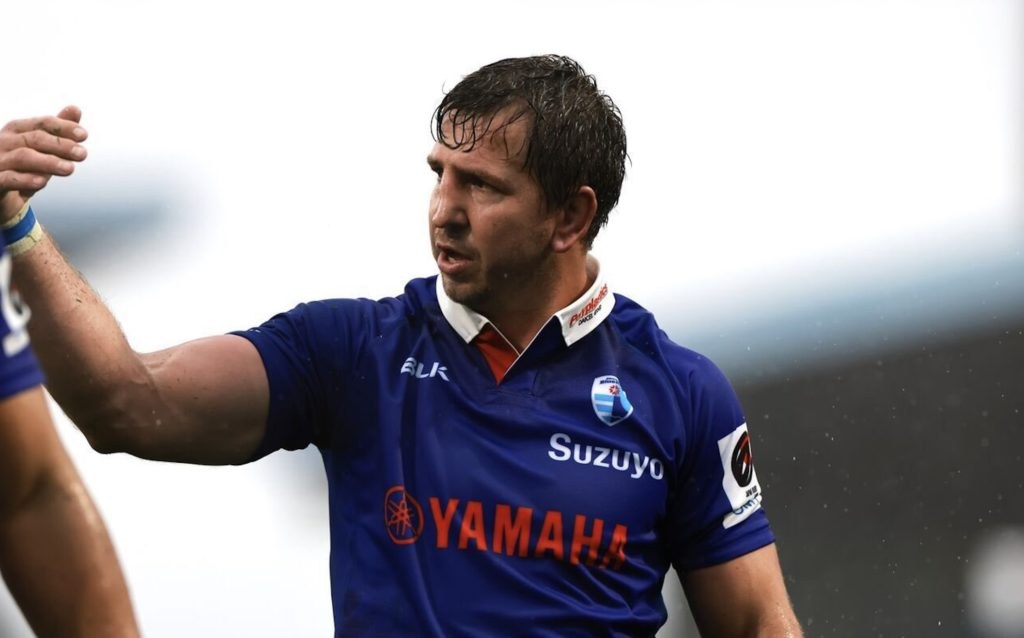
Then, on 20 October 2026, the club announced that it and Smith had agreed to end his playing contract.
The key Japanese wording is 双方合意 — an agreement between both parties.
Not a public disciplinary dismissal. Not an announced sacking for poor form. Not a statement blaming the player. The club offered praise and gratitude, but did not explain what prompted the termination.
That silence matters.
Because when a player of Smith’s standing leaves after eight years, the public deserves more than a farewell graphic if the real question is why the relationship ended now.
To be clear, mutual agreement does not automatically mean a falling-out. It also does not tell us who initiated the discussions, what was negotiated, whether money changed hands or whether either side was unhappy.
Those answers remain unknown.
And we are not going to invent a feud just because a feud would make a better headline.
The knee injury changes the timeline
Smith suffered a serious knee injury in Japan in May 2026, damaging his ACL and meniscus. He underwent surgery and said in July that he was still on crutches, with at least another four months of recovery ahead.
That injury ruled him out of the 2026 Springbok season.
Now look at the timing.
A decorated overseas player is recovering from major knee surgery. His Japanese club is approaching a new season. His contract is terminated by mutual agreement. And, on the same day the departure becomes public, reporting emerges that he could be heading back to South Africa.
That is a legitimate story.
But here is the distinction that separates journalism from WhatsApp rumours: we do not have evidence that Shizuoka ended the contract because of his injury.
We also do not know whether the injury made a negotiated departure more attractive to Smith, the club, or both.
The injury is confirmed. Its role in the contract decision is not.
Still, it raises serious questions about how professional rugby treats an injured player whose value is tied to elite performance. When a player cannot take the field, what happens to the relationship that existed when he was delivering results every weekend?
Does loyalty survive rehabilitation? Does the contract remain a partnership when the player cannot contribute on the pitch? And if both sides decide to move on, who is actually getting the better deal?
We cannot answer those questions for Smith and Shizuoka without their accounts. But rugby should not be afraid to ask them.
The Bulls are the big lead — but the deal is not confirmed
The clearest reported destination is Pretoria.
In September, Bulls coach Johan Ackermann confirmed that the franchise was discussing the possibility of signing Smith and fellow Springbok Malcolm Marx. Ackermann was careful with his words: negotiations were ongoing, nothing was finished, and he would not say either deal was close.
On 20 October, Rugby365 reported that negotiations for Smith had reached their final stages, with an announcement expected within a week or two. That is significant reporting, but it remains a report of an imminent deal — not confirmation that Smith has signed.
The potential reunion is obvious. Ackermann coached Smith during their Lions years. A return to South Africa could put Smith back into the domestic rugby environment as he works towards recovery and the 2027 Rugby World Cup.
But until the Bulls or Smith confirm an agreement, we cannot report the move as done.
And the crucial question is still unanswered: did Smith push for the release because he wanted to return home, did Shizuoka want to end the arrangement, or did both sides decide that the next chapter made more sense elsewhere?
The public record does not tell us.
That is the missing piece.
Now for the bigger question: is Japan rugby a money grab?
Let's be precise. There is nothing inherently wrong with a player earning well overseas. Rugby careers are short, bodies take a beating, and players have every right to secure their financial future.
A club that pays for world-class talent is not doing something immoral. A player who accepts a lucrative contract is not betraying the sport. Japan has invested in building a stronger professional competition, and its clubs have attracted major international names.
The problem begins when the commercial transaction becomes more important than the sporting relationship — or when supporters are sold a story of loyalty while the actual terms of that relationship remain hidden behind contractual language.
Because rugby loves its loyalty narratives.
We celebrate the player who gives everything for a badge. We celebrate the club that turns a foreign signing into a local hero. We talk about culture, identity, family and belonging.
Then a contract ends, and the official statement gives us a handful of respectful words, a list of achievements and a wish for the future.
Everybody moves on.
But who benefited? Who carried the risk? Who was protected when circumstances changed?
In Smith’s case, we do not have the contract, the financial terms or either side’s account of the negotiations. We cannot honestly claim that Shizuoka exploited him, that Smith exploited Shizuoka, or that money was the decisive factor.
But we can examine the system that makes these questions relevant.
Japan’s League One is introducing additional player-registration categories for the 2026–27 season. Under the revised framework, clubs must include at least 14 Category A-1 players in the matchday squad and have at least eight on the pitch at the same time; Category A-2 players are subject to limits of nine in the squad and seven on the field, with some overlap in the categories. The league says the changes are intended to support domestic player development while preserving diversity.
That is not a minor administrative footnote. Squad composition rules can affect recruitment, selection and the value a club places on different types of player.
But we need to be equally clear about the limits of the evidence: there is no public evidence tying these new rules directly to Smith’s departure. We cannot say the system forced him out, or that Shizuoka used the rule change to get rid of him.
The rule changes are relevant context. They are not a proven explanation.
The broader question remains: as rugby competitions become more commercial, how do they balance attracting established overseas stars with building sustainable pathways for their own players? And what happens when a club’s roster strategy, a player’s career ambitions and the economics of a contract stop pointing in the same direction?
That is a debate worth having — without pretending we already know the answer in this particular case.
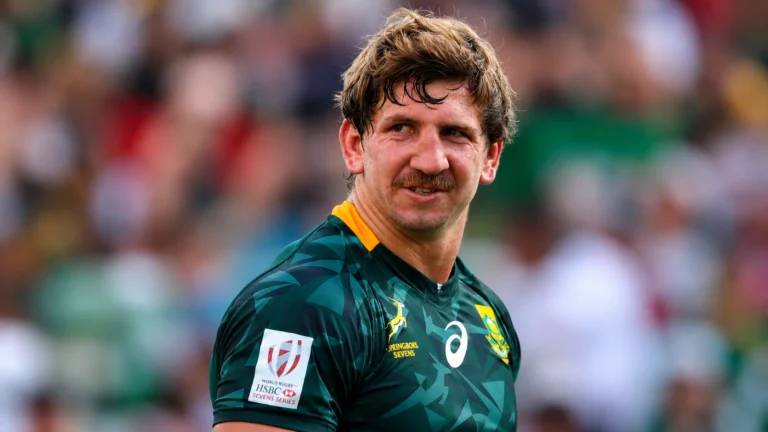
The uncomfortable possibility: both sides can be using the system
We often tell these stories as if one party must be the villain.
The club signs the star, sells the excitement, benefits from his performances and builds its brand around his name. The player gets a salary, a platform and an opportunity to play in a foreign competition.
For eight years, that relationship can work beautifully.
Then circumstances change.
An injury changes the player’s availability. A new opportunity emerges. A club reassesses its squad. A player reassesses his future. A contract that once made sense no longer fits what either side wants next.
That is professional sport.
A club can benefit from a player without being obliged to keep him forever. A player can benefit from a club without being obliged to stay forever.
That is why we need to know what actually happened here.
If Smith asked to leave, the question is what made a return home the better option after eight years. If Shizuoka initiated the split, the question is what changed in its plans. If both parties negotiated the exit, the question is what each side wanted to achieve.
None of those possibilities, on its own, proves exploitation.
But if rugby wants supporters to believe in the language of loyalty, it should be prepared to answer questions about how loyalty works when the business relationship changes.
Otherwise, loyalty becomes the marketing. The contract becomes the reality.
And the supporters are left applauding a partnership whose terms they never get to understand.
What we still need to find out
For ScrumAtMe, the real investigation is not simply whether Smith is going to the Bulls. It is what led to the end of an eight-year relationship.
We need answers to five questions:
- 1. Who initiated the termination? Did Smith or his representatives ask to leave, did Shizuoka approach him, or was the decision genuinely joint from the beginning?
- 2. Did the knee injury affect the negotiations? Not whether he was injured — that is established — but whether his rehabilitation, expected return date or contractual obligations influenced either side’s decision.
- 3. Has Smith signed with the Bulls? Ackermann confirmed interest in September. Rugby365 reported advanced negotiations on 20 October. We need direct confirmation of whether a deal exists, when it begins and what role Smith is expected to play as he recovers.
- 4. Was there a financial settlement? The public announcement does not disclose the contract’s remaining term, the terms of the release or whether compensation was agreed. We should not imply that a payout occurred without evidence.
- 5. What does Smith himself say? After eight seasons, his explanation matters. Was the decision about home, his next rugby opportunity, the World Cup, his recovery, or a combination of factors? Until he speaks publicly, we cannot put words in his mouth.
Those are the questions that could turn a transfer rumour into a meaningful story about the modern professional game.

The verdict? Not yet. The questions? Absolutely.
Kwagga Smith’s departure is confirmed. The mutual termination is confirmed. His eight seasons at Shizuoka, his achievements and his ACL-and-meniscus injury are documented. The Bulls’ interest was acknowledged by Ackermann in September, and Rugby365 now reports that negotiations are at an advanced stage.
What is not confirmed is who initiated the split, why it happened now, whether money changed hands, whether the injury influenced the decision, or whether Smith has signed for the Bulls.
So no — we are not going to manufacture a scandal and call it an investigation.
But we are also not going to pretend the only story here is a club thanking a player for his service.
Because this is bigger than one Springbok and one Japanese club.
It is about the future of a sport that sells loyalty, identity and belonging while operating inside an increasingly global market for talent.
Is Japan Rugby League One building a stronger game — or are professional rugby’s financial incentives beginning to shape the sport more than its traditions?
And in the case of Kwagga Smith, after eight years together, who decided the relationship was over — and what did each side get out of it?
Those are the answers we need.
Not another goodbye graphic.
ScrumAtMe. We ask the questions the press release doesn't answer.
Editorial note: This article reflects the public reporting available on 20 October 2026. It will be updated if Smith, Shizuoka Blue Revs or the Bulls confirm further details.